


















VISUALIZE EM
360°
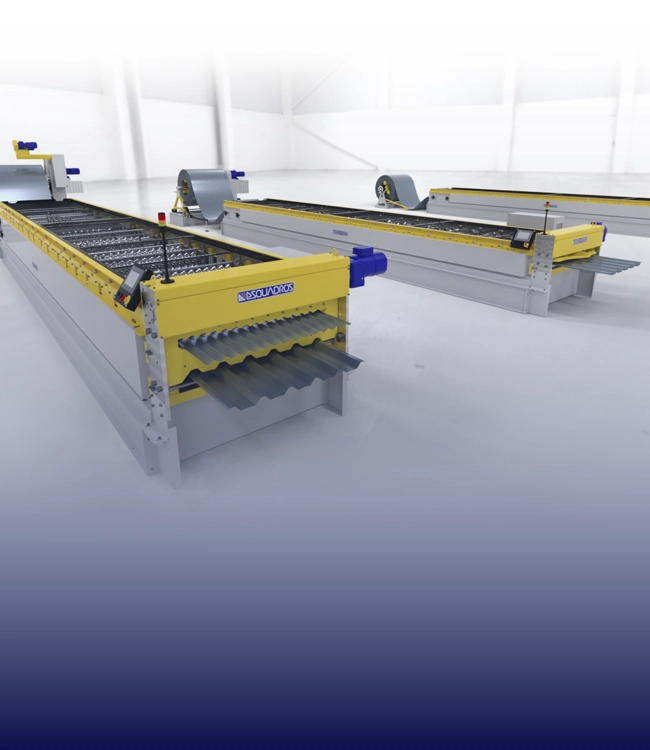
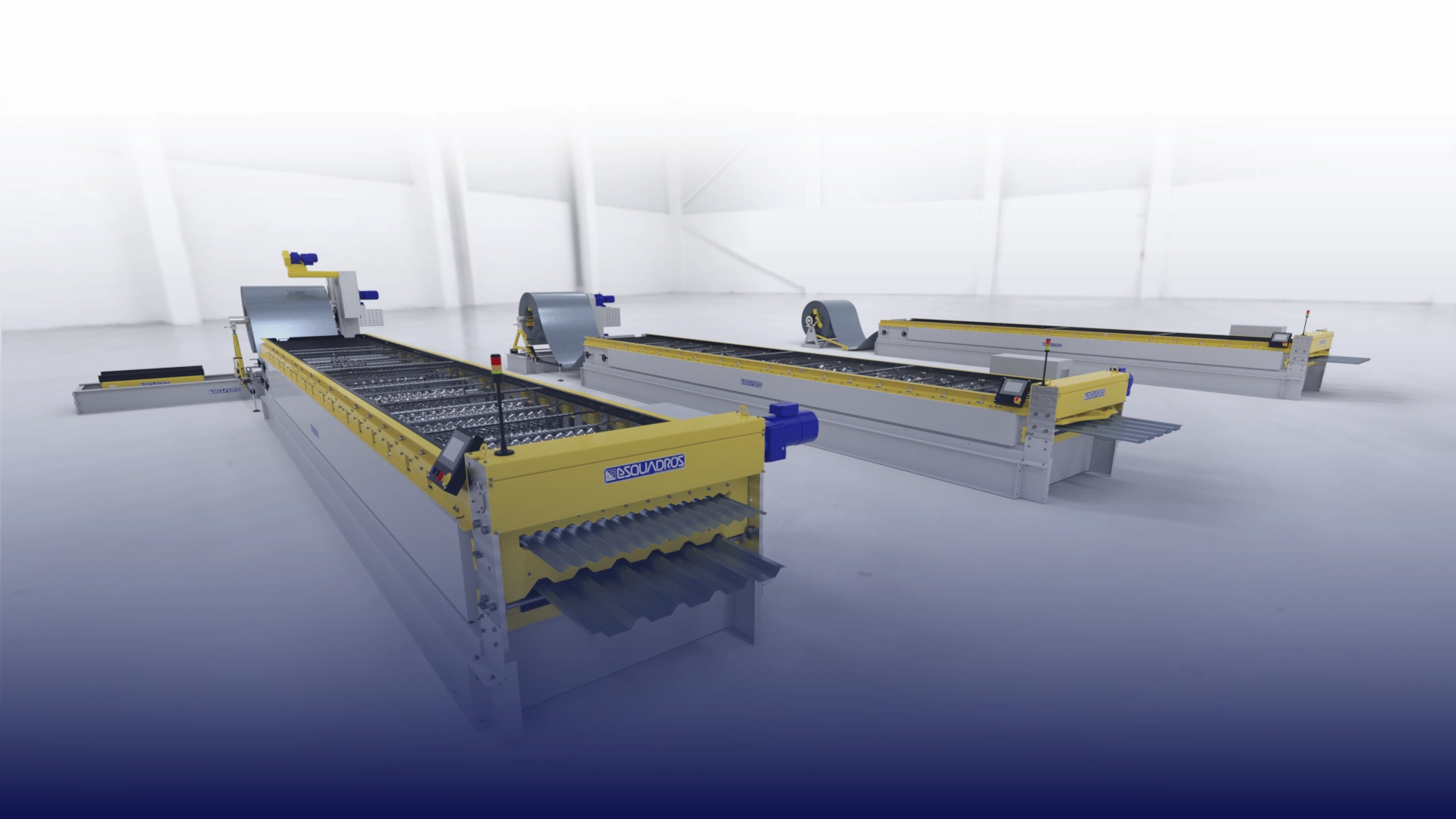
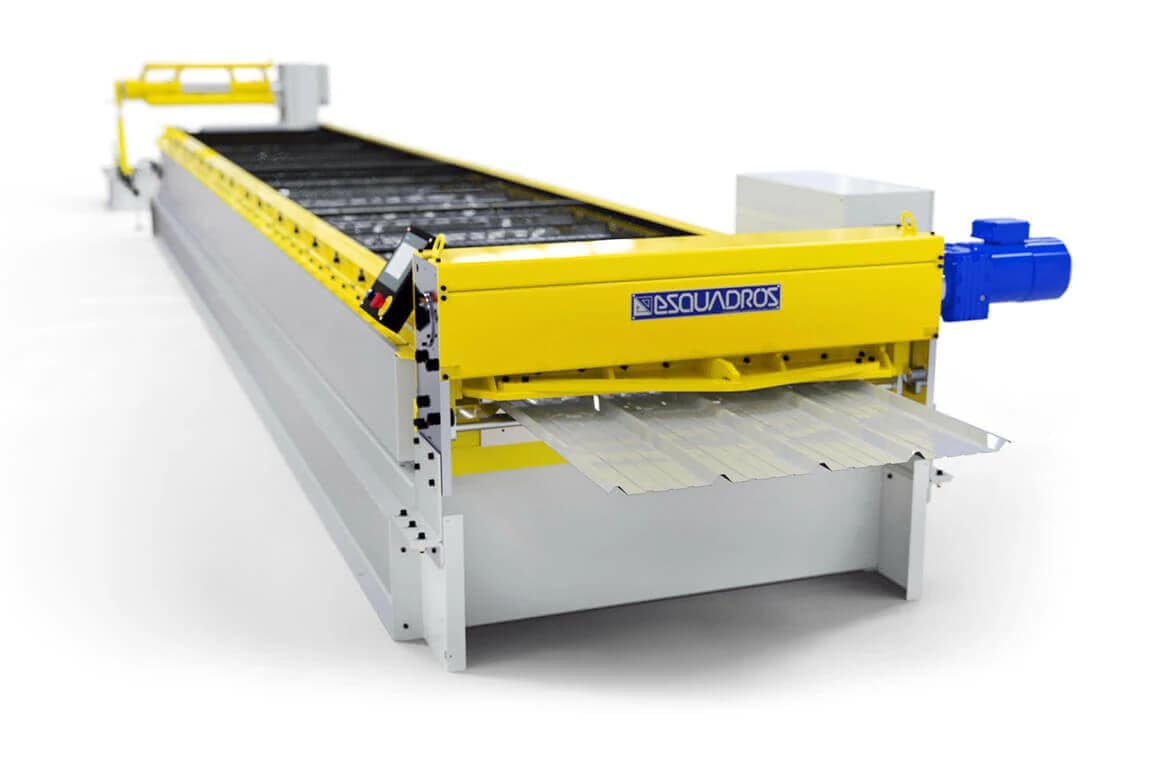
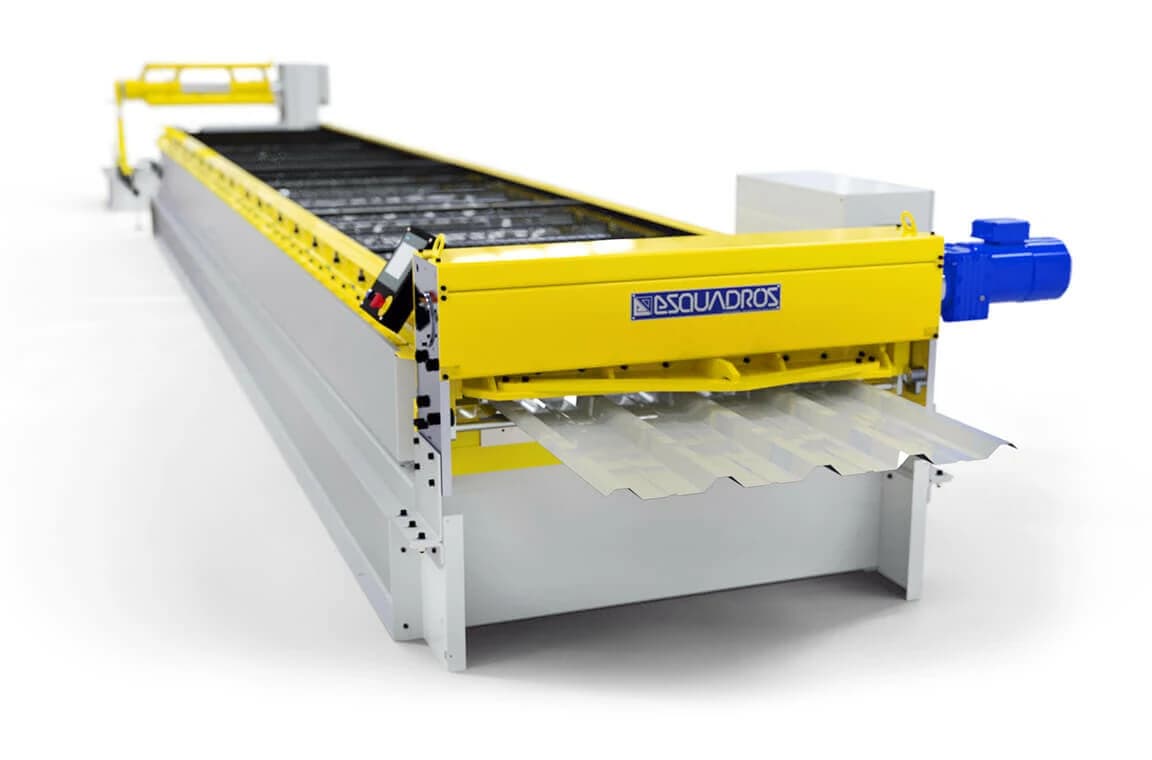
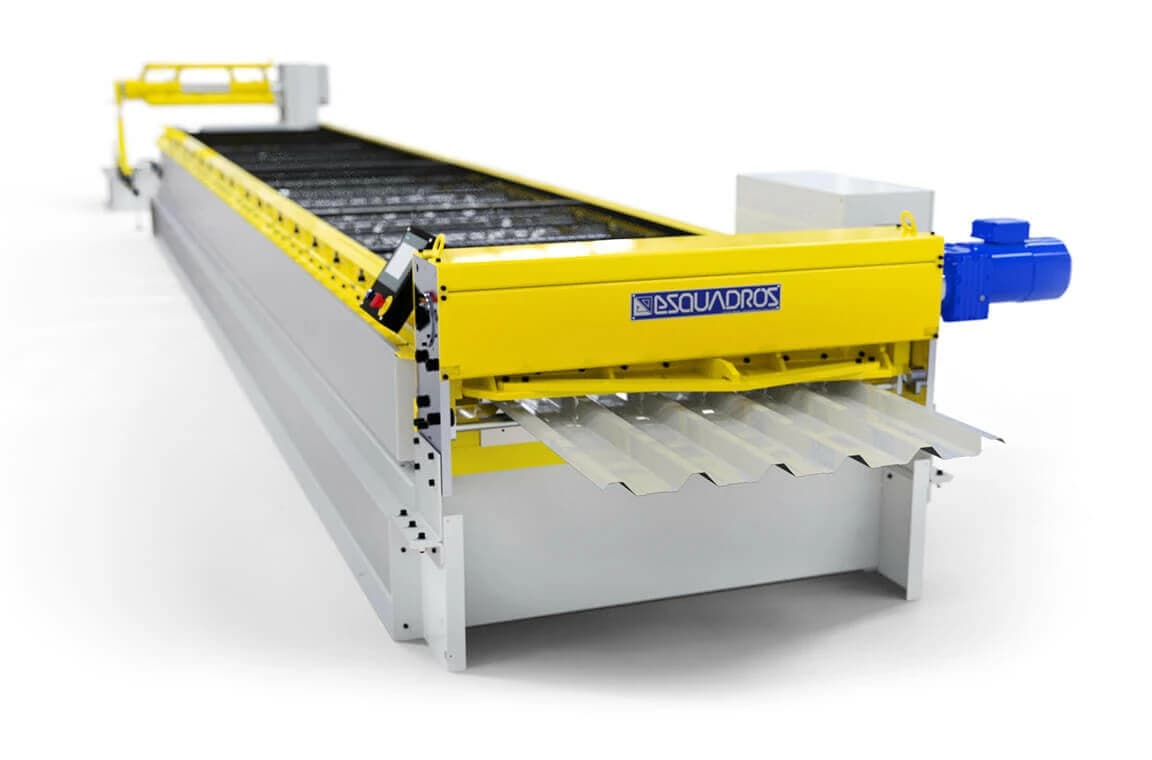
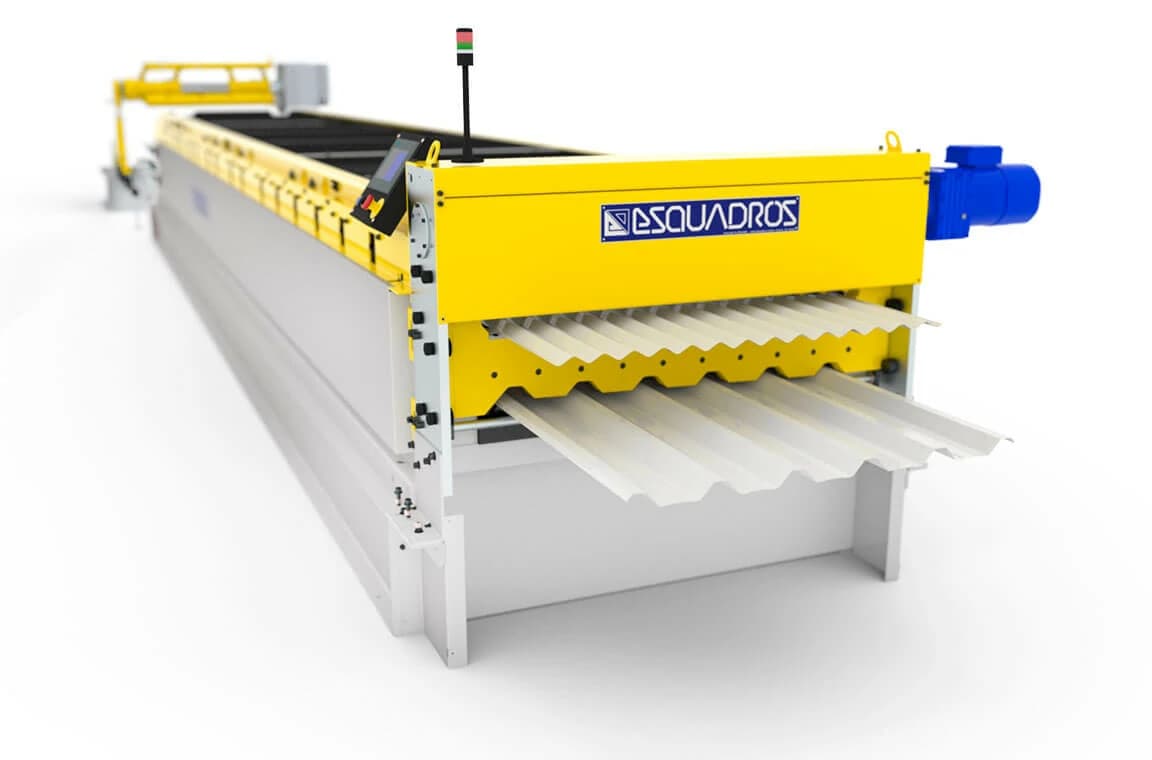
ROOF TILE ROLLFORMING MACHINES
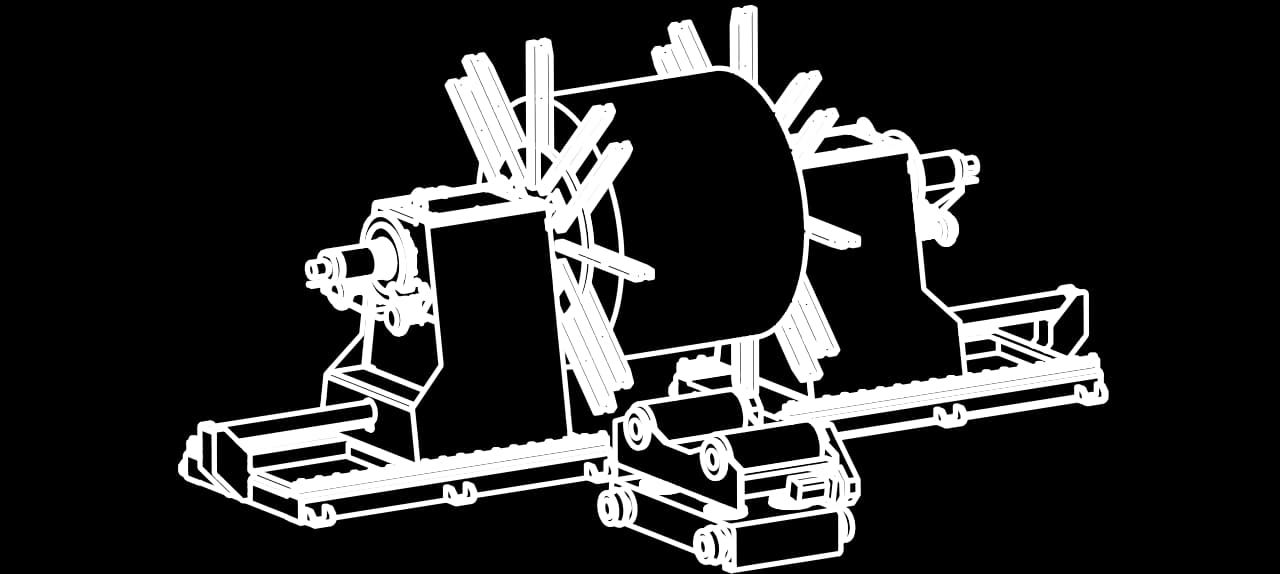
ESQUADROS®
ESQUADROS PREMIUM®
Machines for customers with severe working regimes and high production. The state of the art for processing coils.
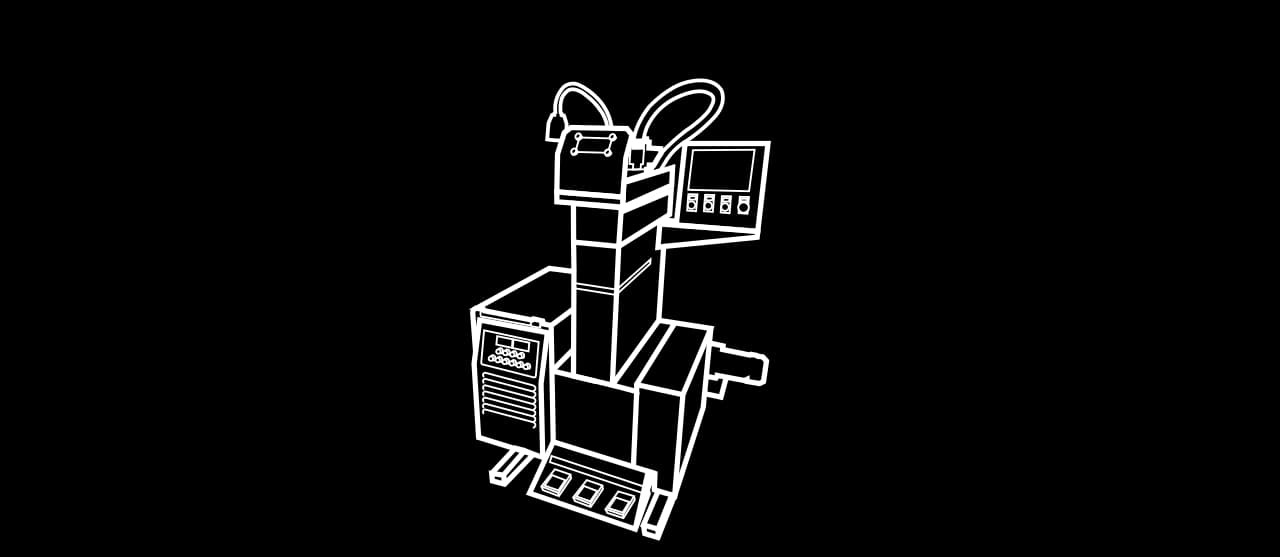
ESQUADROS PRO®
For customers looking to lower fixed costs through automation, less labor in the factory.
ESQUADROS ESSENCIAL®
Perfect for customers who do not have a demand for high machine output and do not need to automate setups.


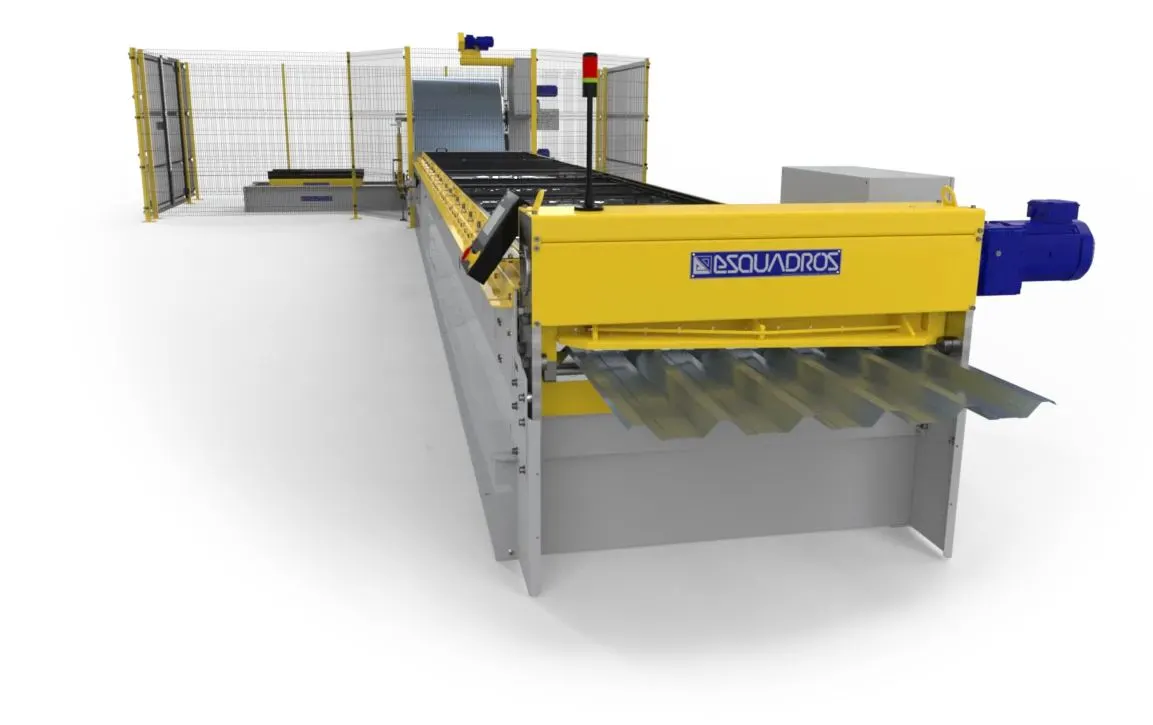
INNOVATION AND TECHNOLOGY FOR THE MANUFACTURE OF METAL TILES ESQUADROS®
ESQUADROS IS TRANQUILITY FOR YOU!
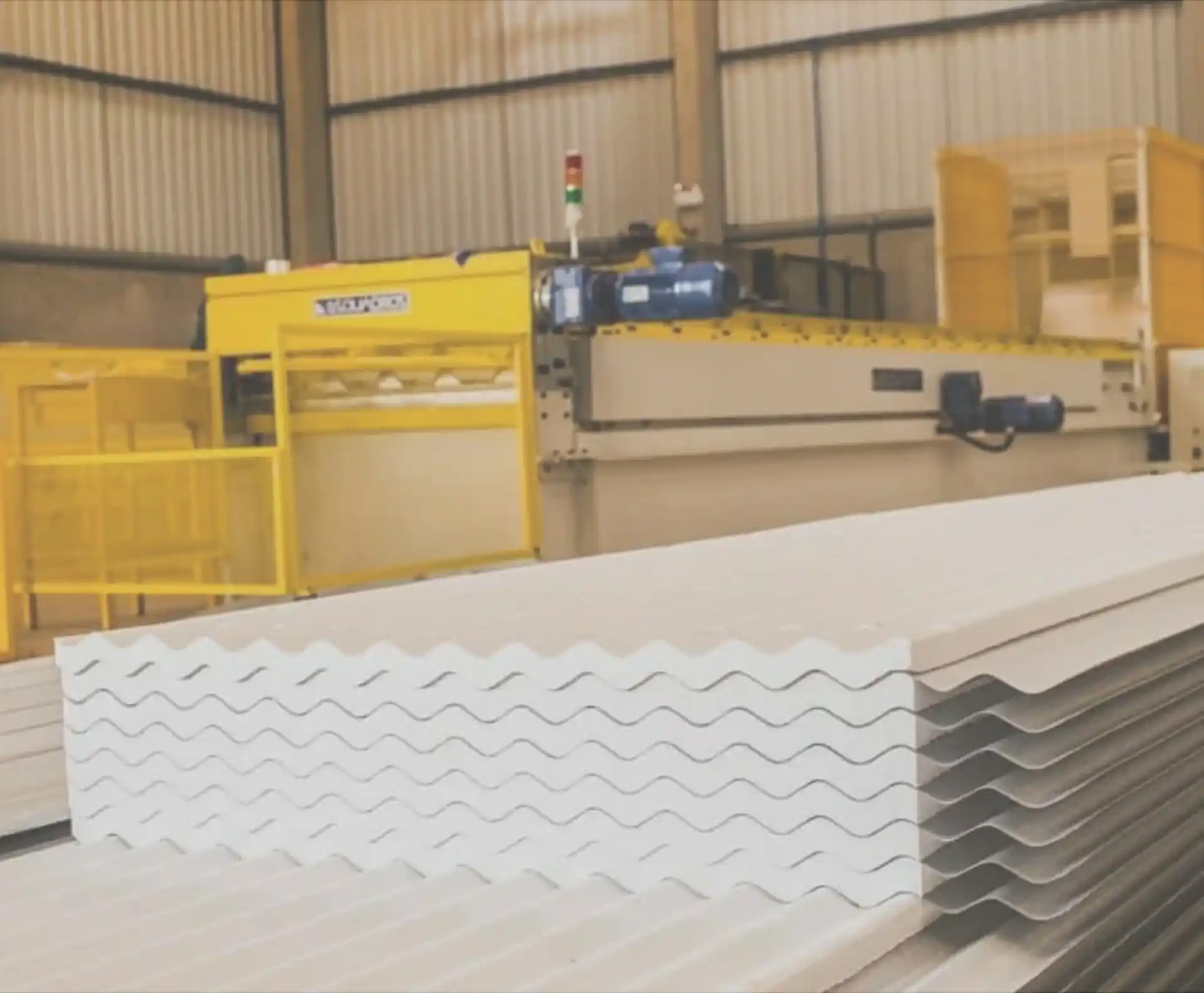
Our metal roof tiles rollforming machines are models of superior performance, with a revolutionary manufacturing and industrial model with required patent.
We guarantee a profile produced in accordance with Brazilian standards NBR 14513 and 14514 with the highest quality in the cutting and surface of the tiles. Our roof tile rollforming machines are present in the main manufacturers of metal roof tiles in Brazil and can process galvanized steel, galvalume steel, pre-painted steel, aluminum, among others.
All our designs of conformation rolls are designed and validated in the PROFIL software, with german technology, which checks the forming tensions according to the properties of the materials, generating confidence that the rollers will be able to conform the profile according to the desired tolerances.
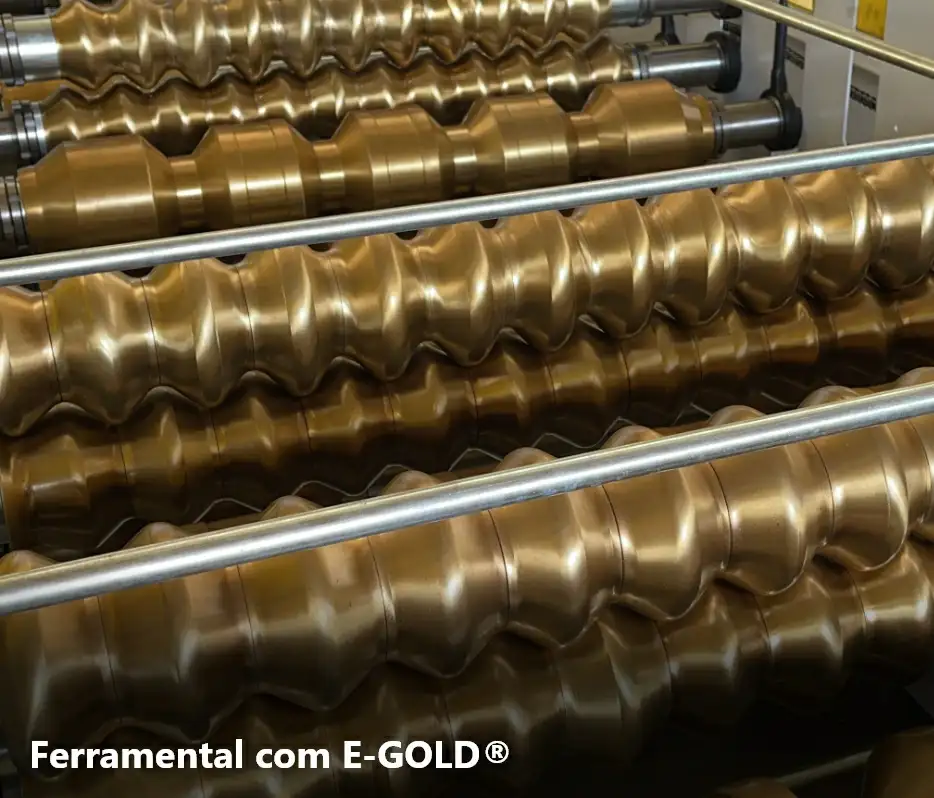
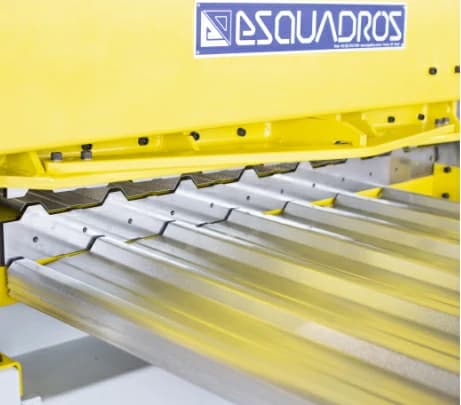
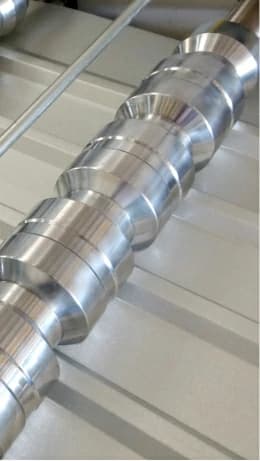
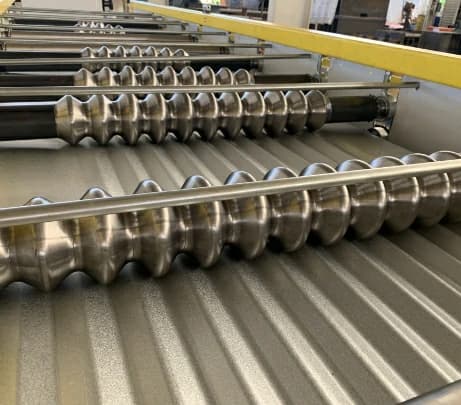
The rolls of Esquadros roof tile machines have exclusive technology that maintains contact throughout the section of the sheet being formed, at all stages of conformation, in order to guarantee total quality in the profile produced.
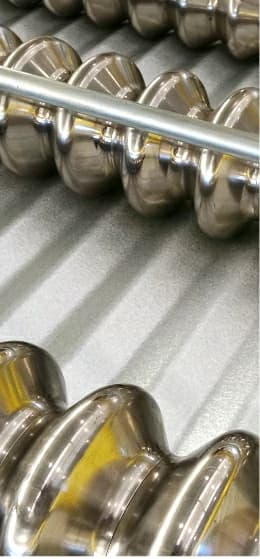
Esquadros launches to the market its new exclusive technology for coating rolls called E-GOLD®. Characterized by its golden color, this titanium surface treatment combines high corrosion resistance with a reduction in the coefficient of friction, bringing to the confirmation rolls of the Esquadros machine the most modern in terms of metal surface finish, and reaffirming our commitment to innovation and technology.
The structural design of the machine was conceived considering the current Brazilian safety legislation, which enabled the Esquadros® roof tile rollforming machine to be the pioneer in the market in terms of compliance with NR-12. With risk assessment prepared according to national and international standards by our own independent engineers, our machines are designed to operate with the concept of "safe mode" and "safe stop" (STO - safe torque-off). In addition to fixed and mobile physical protections, the machines have electronic monitoring and interlocking devices, ensuring safety in all risk zones and tranquility for those involved.
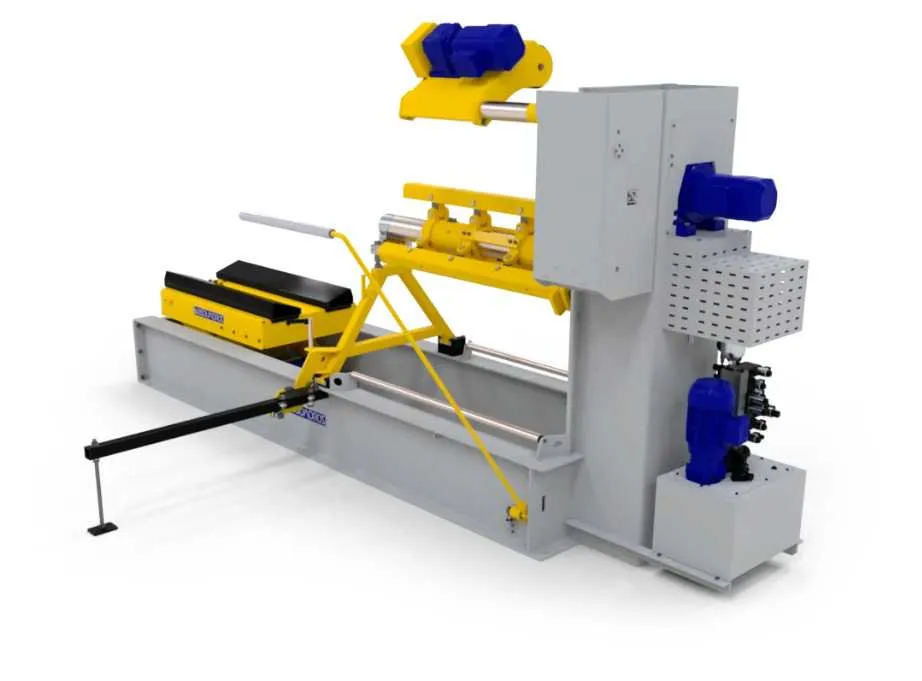
The flexible design and a wide range of optional equipment increase the operational ease and productivity of the set, and can dramatically reduce setup times and the cost of operation.
Among the optionals:
• Motorization and intelligent electronic speed control of the decoi
• Hydraulic expansion of the decoiler mandrel for automatic coil fixat
• Pressing arm "peeler" with motorized rol
• Coil loading trol
• Entrance ta
• Edge trimmer for manufacturing thermo-acoustic tiles ("sandwich til
• Refill roller;
We know our customer’s expectations and we propose to provide excellent machines, capable of producing profiles with high quality standards. Each of our rollforming is rigorously tested inside Esquadros’ company and approved before being delivered.
MODELS
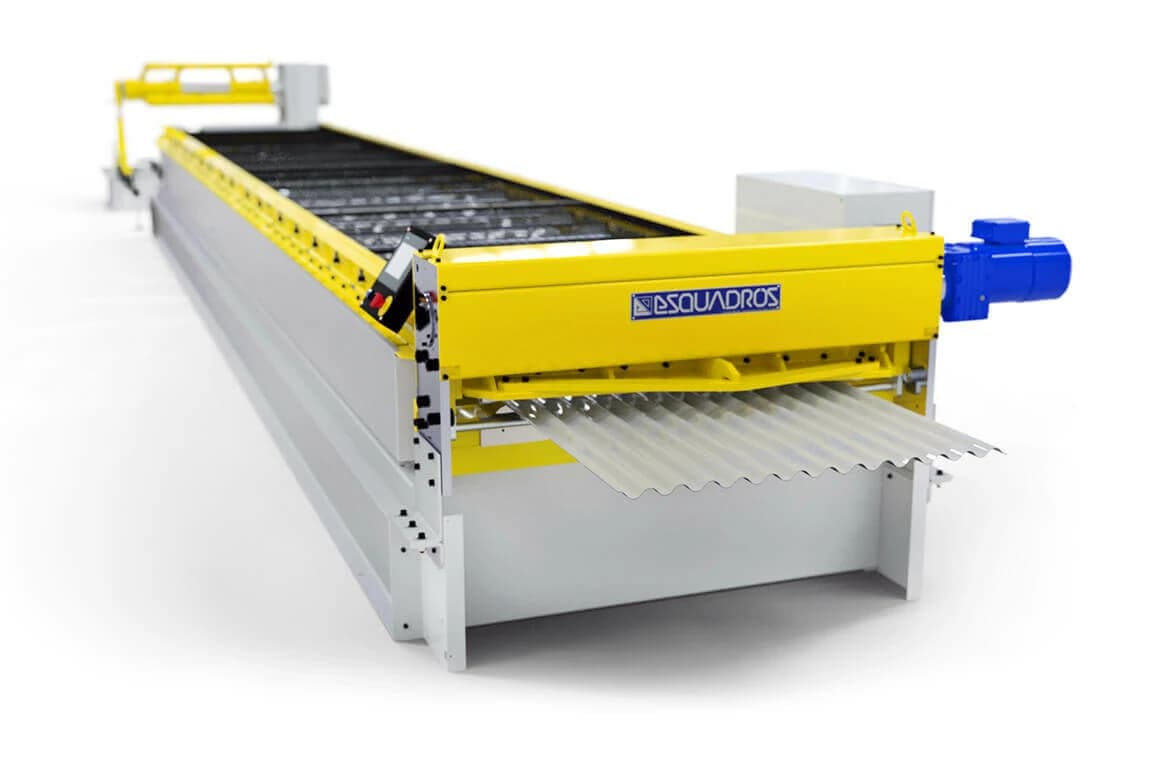
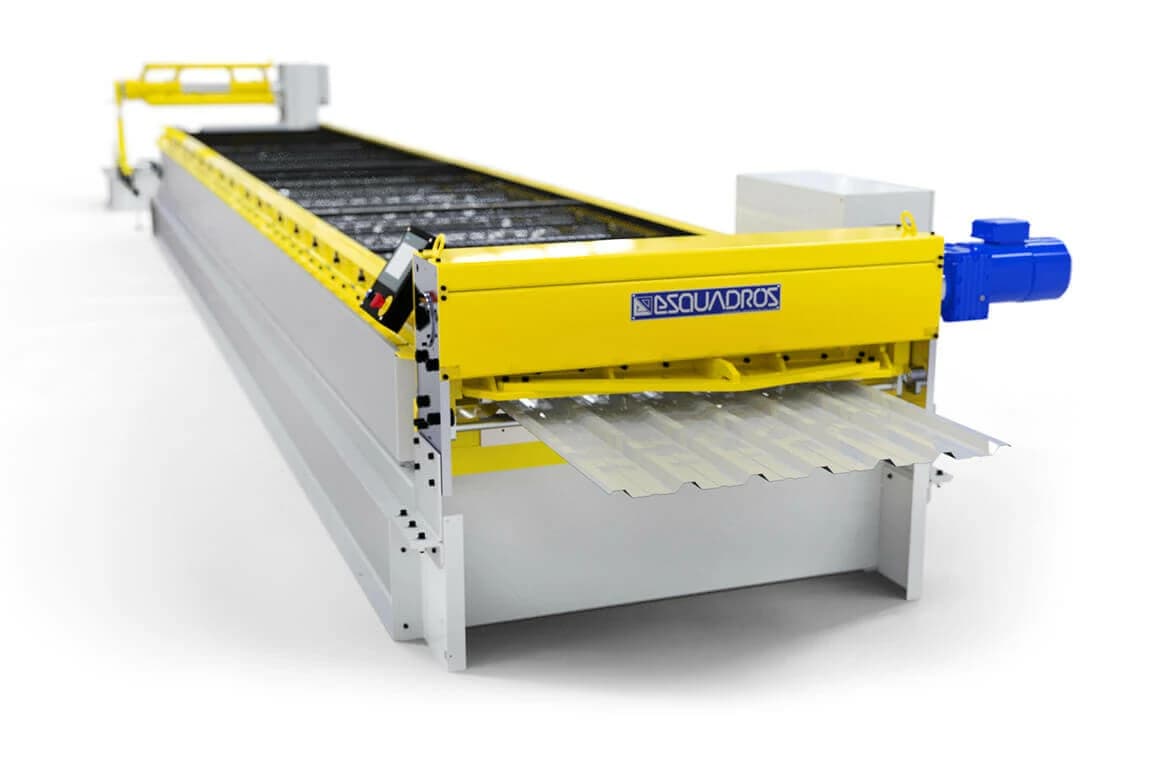
PRODUCT LINE COMPARISON
| CHARACTERISTICS | ESQUADROS ESSENTIAL | ESQUADROS PRO® | ESQUADROS PREMIUM® |
|---|---|---|---|
Maximum thickness Decoiler | |||
MAIN FEATURES
• Profiles produced according to NBR 14513 and 14514 standards;
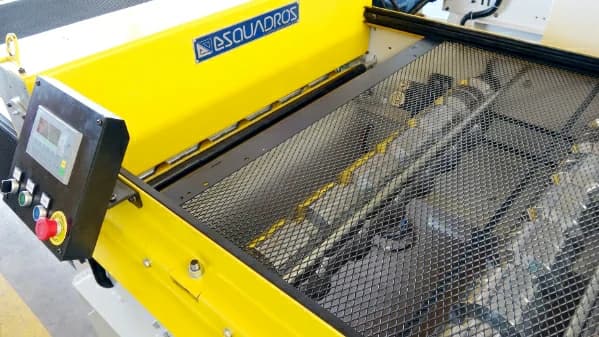
• Fully in compliance with NR-12 safety standard;
• Profile maintains contact throughout the entire section of the plate (exclusive);
• E-GOLD® gold titanium surface finish (exclusive);
• Structural design with patent required (exclusive);
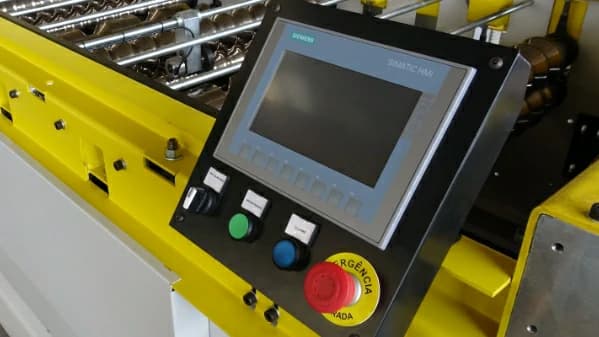
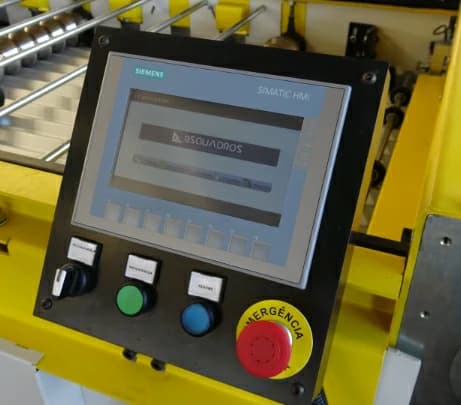
• Operation with SIEMENS touch-screen HMI (human-machine interface);
• Coils up to 15 tons;
• Thicknesses from 0.25 to 0.65 mm;
• Speeds up to 60 m/min;
• Motorized shear up to 120 strokes per minute;
• 100% Brazilian design, manufacturing and technical assistance
• Technical delivery to the customer's facilities by our technicians;
• Complete documentation of the machine;
OUR DIFFERENTIALS
• 100% national manufacturing guarantees profiles produced in accordance with Brazilian standards NBR 14513 and 14514, within the highest quality standard required by the market;
• The conformation rolls have exclusive and innovative technology that maintains contact throughout the section of the sheet being formed, in all stages of conformation, in order to guarantee total quality in the profile produced - a solution far superior to the spaced rolls that are used in the market.
• First machine on the Brazilian market with an ultra-fast, high-productivity and almost maintenance-free motorized shear;
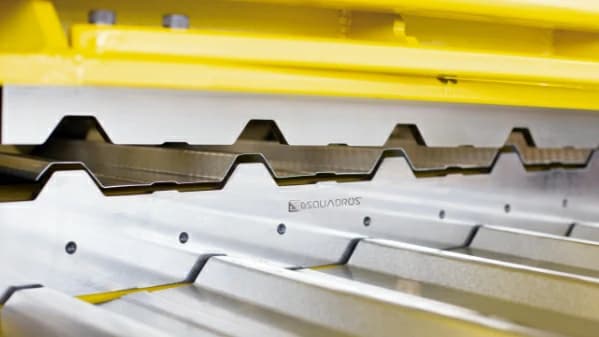
• Shear knives with two cutting edges, made of superior VD2 tool steel, hardened and tempered in vacuum, and cut by wire electroerosion, require less sharpening and have superior service life;
• The structural design of the machine was conceived considering the current Brazilian safety legislation, which enabled the Esquadros® roof tile roll forming machine to be the pioneer in terms of compliance with NR-12;
• Full compliance with the NR-12 standard (protection of the risk zone in the forming area);
• Well-dimensioned high-performance motors that guarantee greater efficiency, minimum energy consumption and sustainability;
• High productivity through sharply reducing setup times and optimizing automation parameters;
• World-class, high-quality components;
• Complete machine documentation includes installation, operation and maintenance manuals, machine layout, diagram of electrical, hydraulic and pneumatic circuits, certification of safety devices used, among others;
• Training and operation tests available at Esquadros before shipment. Start-up and technical delivery at the customer's facilities by our technicians;
• Complete post-sales service with responsiveness, full support for your business throughout the product's life cycle, service by technicians and engineers with experience and specialized knowledge, high availability of parts and services;
ESQUADROS® DIFFERENTIALS
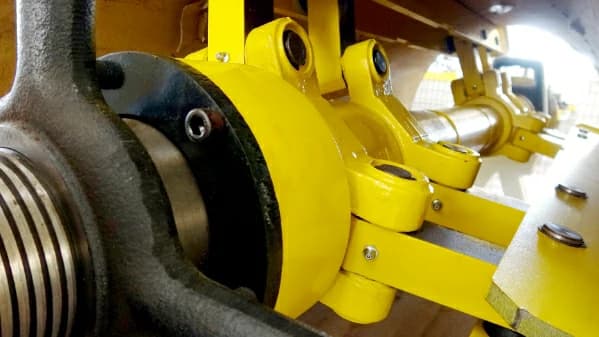
SYNCHRONIZED EXPANSION
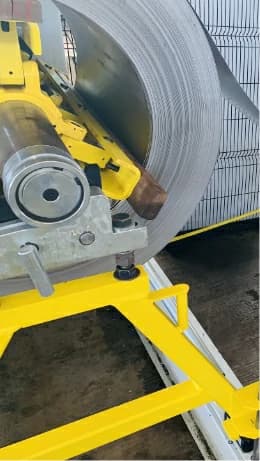
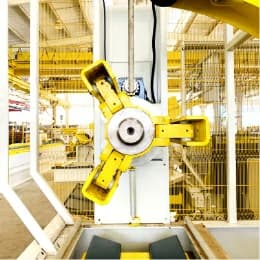
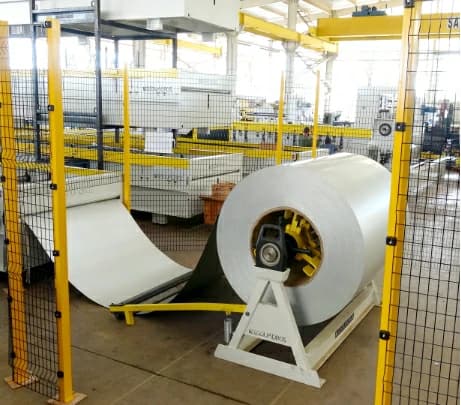
Synchronized expansion with uniform articulation of the mandrel supports, with centralized drive at a single point. Provides fast, easy, safer and less operator-dependent setup (Essential line).
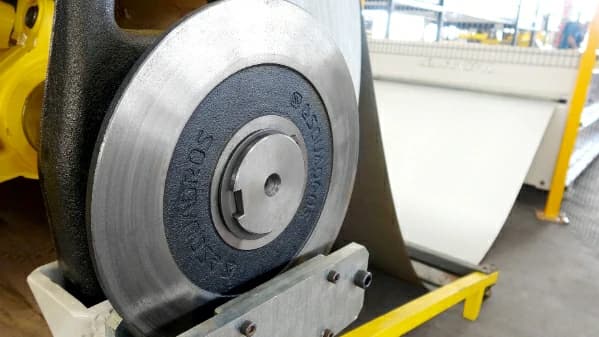
DISC BRAKE WITH BACK ADJUSTMENT
The disc brake has back adjustment outside the risk area, ensuring the operator safety. (Essential line)
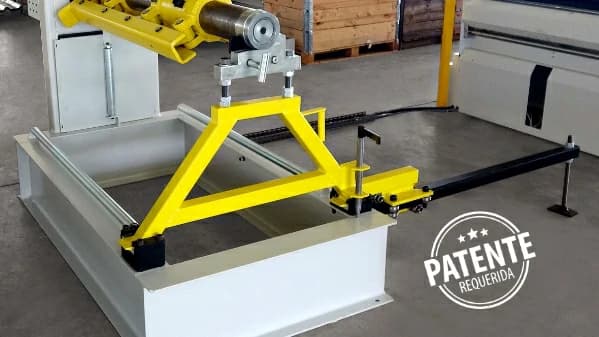
SLIDING COUNTER-SUPPORT
The mancalized decoiler is equipped with a rolling counter support system, which facilitates and speeds up the coil introduction operation, an innovative and exclusive solution of Esquadros, with patent applied for. (PRO and Premium line)
ELECTRONIC CONTROL
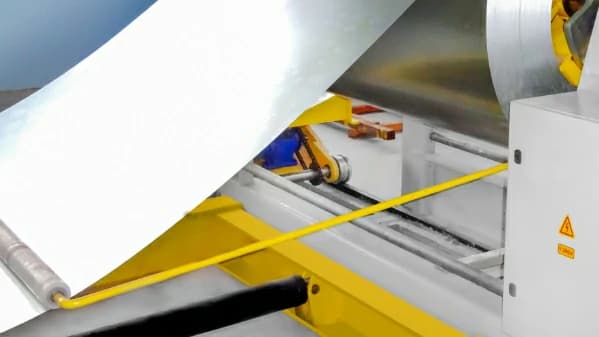
The frequency inverter with special software receives the signal from the loop monitoring sensor ("belly of the sheet") and automatically varies the decoiling speed during the line processing (in closed circuit), providing a smooth and uniform operation, and eliminating the need for operator intervention. In conventional solutions on the market, the operator has to constantly adjust the motor speed via a potentiometer as the coil is reduced in diameter (Pro and Premium lines).
ROLLING ENTRY GUIDES
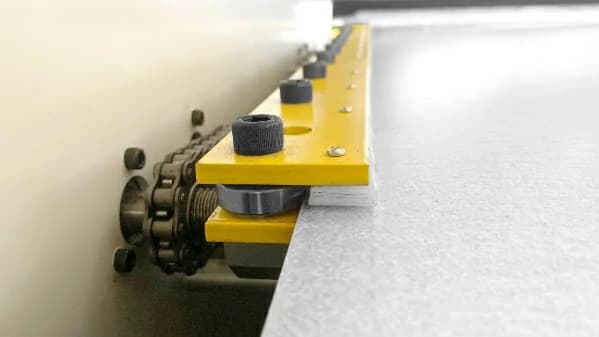
The entry guides are composed of roller guides. There is minimal friction with the sheet, which ensures a smooth entry without damaging the raw material, and eliminates the entry of sheet scale into the machine from friction between the sheet and the guides, which can damage the surface of the tiles and encrust the rolls.
SYNCHRONIZED ENTRY GUIDES WITH HANDWHEEL REGULATION
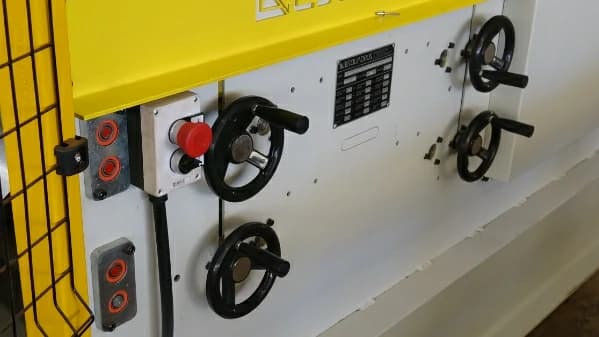
The synchronized guides ensure parallelism in the sheet entry, so the first tile can already be produced with quality, eliminating the loss of material and reducing operator dependence in the process. In addition, the handwheels are on only one side of the operation, eliminating the need for the operator to go around the machine to adjust the sheet entry guides. Easier and faster setup.
100% PROFILE ROLLS COATED
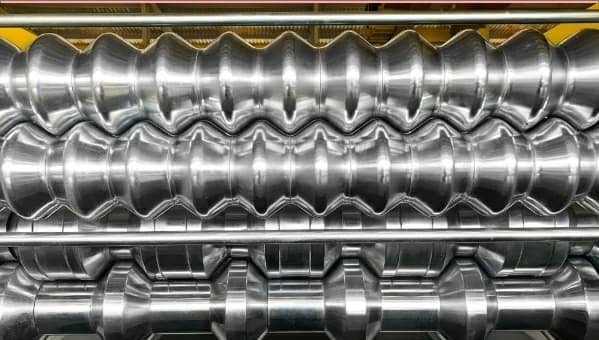
The conformation tooling of Esquadros roof tile machines has exclusive technology that maintains contact throughout the section of the sheet being formed, in all stages of conformation, in order to guarantee total quality in the profile produced. It guarantees stability during processing and eliminates the possibility of misalignment of the tooling caused by possible vibrations.
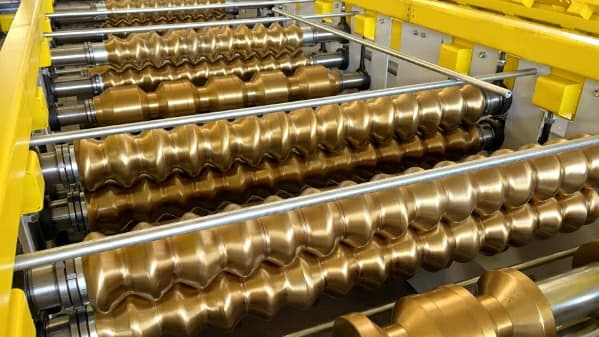
E-GOLD SURFACE TREATMENT
Characterized by its golden color, this titanium surface treatment combines high resistance to corrosion with a reduction in the coefficient of friction, bringing to the conformation rolls of the Esquadros machine the latest in terms of metal surface finish.
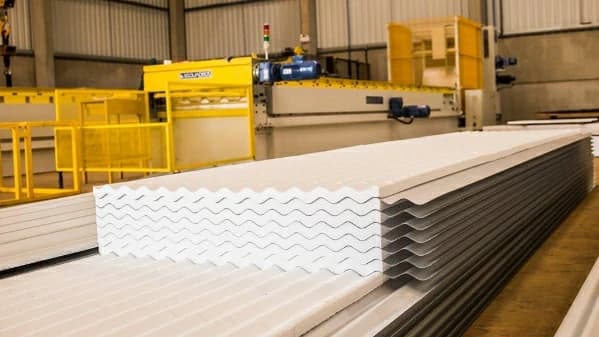
SANDWICH TILE (THERMOACOUSTIC TILES)
Rigid and precise edge trimmer set with rotating knives made of D2 tool steel. It allows the trimming without edges of the side of the profile for the manufacture of thermoacoustic tiles (sandwich tiles) with maximum quality in the finish.
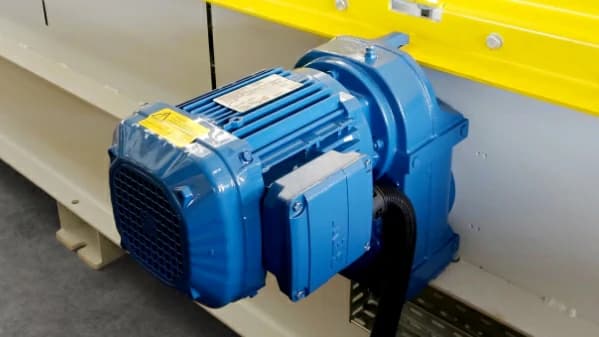
SEW GEARMOTORS DIRECTLY COUPLED TO THE SHAFT
Highly energy-efficient gearedmotors from the German brand SEW rigidly coupled directly to the transmission shafts. The drives are well dimensioned, providing greater efficiency, minimum energy consumption and sustainability.
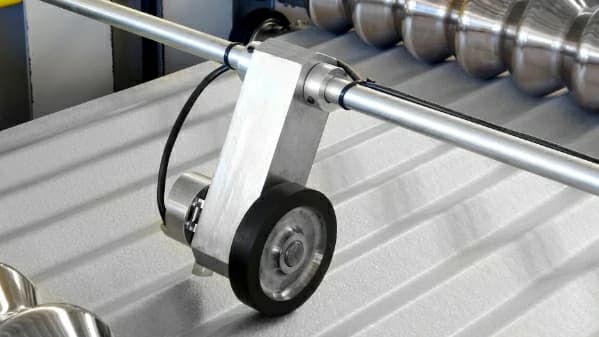
ENCODER 4096 PULSES
Measuring encoder of the German brand SICK with 4096 pulses for measuring the length of the tile produced. Ensures more precision in the final measurement.
100% DIGITAL SPEED CONTROL
Digital speed adjustment through the latest generation touch-screen HMI (human-machine interface), adjustable from 0-100%. Electrical panel with SIEMENS components, a world leader in electrical and electronics, more quality, durability, reliability and easy access to spare parts.
FULL COMPLIANCE WITH NR-12
Project designed for safe machines according to NR-12. The entire length of the conformation workbench is enclosed by movable protections, making it impossible to access the rollers while the machine is in operation.
ULTRA-FAST MOTORIZED SHEAR UP TO 120 GPM
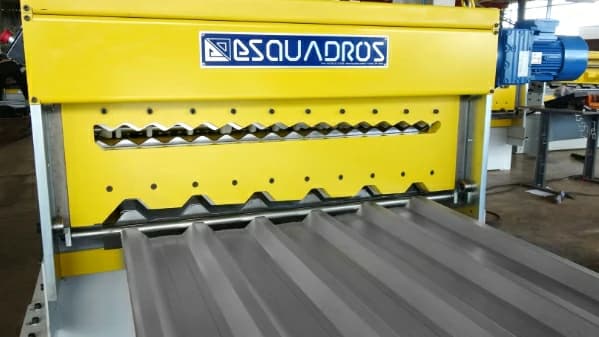
Motorized shear with ultra-fast speed of up to 120 strokes per minute. It is up to 10 times faster than conventional hydraulic drive models, and eliminates maintenance required for hydraulic systems, such as oil changes, filter changes, cylinder seal replacements and re-tightening of connections due to leaks. Esquadros' patent-pending drive mechanism features rolling movements that provide minimal friction and low maintenance.
D2 TOOL STEEL KNIVES
Shear knives with two cutting edges, made of superior D2 tool steel, hardened and tempered in vacuum, and cut by wire electroerosion, require less sharpening and have a longer service life. They guarantee cutting quality with no edges.

COMPLETE AFTER-SALES SERVICE
All the advantages of 100% national manufacturing. Complete after-sales service with responsiveness, full support for your business throughout the product life cycle, service by technicians and engineers with experience and specialized knowledge, high availability of parts and services.
ESQUADROS® ROOF TILE FORMING MACHINE
Our metal roof tiles rollforming machines are models of superior performance, with a revolutionary manufacturing and industrial model with required patent.
All our designs of conformation rolls are designed and validated in the PROFIL software, with german technology, which checks the conformation
tensions according to the properties of the materials, generating confidence that the rollers will be able to conform the profile according to the desired tolerances.
We know our customer’s expectations and we propose to provide excellent machines, capable of producing profiles with high quality standards.
Each of our rollforming is rigorously tested inside Esquadros’ company and approved before being delivered.
DIMENSIONAL AND ROOF TILE MODELS
Produce roof tiles standardized to the norms
NBR 14513 and 14514
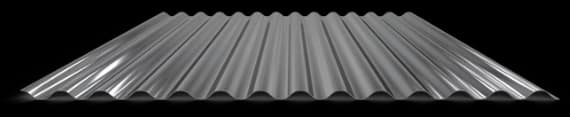
OND17


TR25X1020


TR35X1050

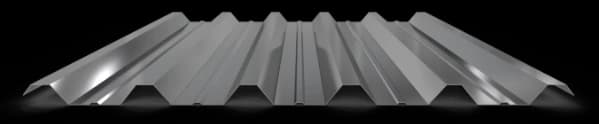
TR40X980


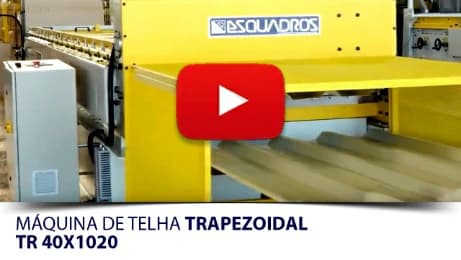
TR40X1020


WHY IS ESQUADROS® THE BEST CHOICE?
• Because it is a company that provides permanent technical assistance;
• Because for 36 years Esquadros® has fulfilled all its commitments to customers;
• Because the machines are totally safe according to NR12;
• Because the designs of its machines are technological and perfect;
• Because they are machines tested to exhaustion to ensure quality and performance;
• Because the components are from brands such as Gerdau, Arcelor Mital, Siemens, SEW, SICK, Schmersal, Belgo Bekaert, etc;
• Because the customer receives the machine within the contracted period;
• Because the prices have the best cost x benefit ratio and the machines pay for themselves;
• Because Esquadros® guarantees the exchange for a superior model according to the needs of the customer's business growth;
• Because they have all the accreditations and financing available in Brazil:
Finame - Leasing - Proger - Cartão BNDES - FCO - FINEP - BANCO DO NORDESTE
BUY TRANQUILITY FOR YOU
MEDIAS
Clear all your doubts!
• Galvalume Steel: High corrosion resistance, excellent durability, and thermal reflectivity. It is the most widely used. [cite: 3]
• Galvanized Steel: A more economical option with good corrosion resistance, but a shorter lifespan compared to galvalume. [cite: 4]
• Pre-painted Steels: Coils with paint applied in a continuous line over a galvanized or galvalume base, offering a better aesthetic finish and greater protection against corrosion. [cite: 5]
• Aluminum: Lightweight and highly resistant to corrosion, ideal for coastal regions, but at a higher cost. [cite: 6]
Conclusion: Galvalume steel, natural or pre-painted, is the most popular because it offers the best balance between strength, durability, and cost-benefit. [cite: 7]
This coating protects the steel against oxidation by combining the aluminum barrier with the zinc protection, making it last longer than common galvanized steel. [cite: 10]
It also reflects heat better, which is why it is widely used in metal tiles and roofing. [cite: 11]
"Galvalume®" is originally a registered trademark, but in Brazil, the name is used generically for this type of steel, which may also appear under other commercial names such as Aluzinco® and Zincalume®. [cite: 12]
Galvanized steel is coated only with zinc. [cite: 15]
Galvalume steel, according to the ASTM A792 standard, is coated with an alloy of 55% aluminum, 43.4% zinc, and 1.6% silicon, offering greater corrosion resistance in roofing and better thermal reflectivity. [cite: 16]
For the manufacturing of metal tiles, Galvalume is widely used in Brazil due to its durability, performance in outdoor environments, and better thermal reflectivity compared to conventional galvanized steel. [cite: 17]
The higher the coating mass, the greater the corrosion resistance. [cite: 20]
Tiles must be manufactured with hot-dip coated steel, meeting the following criteria: [cite: 23]
• Zinc-coated (Z275): 275 g/m². [cite: 24]
• Aluminum-Zinc: 150 g/m². [cite: 24]
• Zinc-Aluminum-Magnesium: 120 g/m². [cite: 25]
The durability of the tile depends directly on the coating mass; it is essential to ensure that the material meets normative specifications to avoid premature corrosion and extend its useful life. [cite: 26]
According to ABNT NBR 14513:2022, the minimum required for tiles with Al-Zn coating is 150 g/m², corresponding to the AZ150 specification. [cite: 29]
This value directly impacts the product's performance: a higher coating mass increases corrosion resistance and the tile's lifespan but also raises the cost of raw materials due to higher metal alloy consumption. [cite: 30]
In Brazil, the metric system (g/m²) is used, which is the official unit standard. [cite: 32]
According to ABNT NBR 14513, the minimum coating for Al-Zn tiles is 150 g/m². [cite: 33]
Therefore, the difference is only in the way the value is expressed. [cite: 34]
The choice of the ideal channel varies according to demand, the required lead time, negotiation capacity, and available logistical structure. [cite: 37]
To obtain the best cost, it is fundamental to evaluate purchase volume (direct negotiation with the mill requires minimum quotas), compare stock price versus current price, consider logistical costs—especially road freight—and negotiate adequate payment terms. [cite: 40]
It is also indispensable to analyze the impact of the operation's fiscal structure, including any incentives, differentiated regimes, and the possibility of using credits, as this can significantly alter the effective cost per ton. [cite: 41]
Finally, correctly defining the technical specification (steel grade, coating, thickness, tolerances, and standards) avoids production losses. [cite: 42]
The best price is the one that results in the lowest total cost, considering value per ton, logistics, commercial conditions, fiscal framework, and technical compliance. [cite: 43]
This standardization ensures compatibility with most roll-forming machines available in the sector, optimizes raw material utilization, and contributes to greater production efficiency, reducing waste and unnecessary adjustments in the process. [cite: 46]
• Gantry Crane: An efficient alternative for movement within the factory, as it runs on tracks on the ground and does not require a prepared warehouse structure. [cite: 49]
• Bridge Crane: The best option for fast, safe, and efficient movement, but requires a warehouse with an adequate structure to support the load. [cite: 50]
For early-stage operations, the munck truck can temporarily meet coil handling needs. [cite: 51]
The gantry crane represents a suitable alternative for warehouses that do not have a structure dimensioned to support suspended loads. [cite: 52]
The bridge crane is the most efficient and safe solution. [cite: 53]
But there is no single "best" weight for all cases. [cite: 56]
In tile manufacturing, it is common to have small orders and variations in thickness, color, or finish. [cite: 57]
This requires frequent coil changes. Therefore, very heavy coils do not always bring a practical advantage. [cite: 58]
The ideal weight depends on the type of production and the factory structure. [cite: 59]
This problem is more common in imported pre-painted coils because, in addition to the rolling process, these coils go through the coil coating (continuous painting) process and may not be rewound with sufficient tension. [cite: 62]
Furthermore, coils are stacked during maritime transport, which can generate deformations if they are not well accommodated. [cite: 63]
Ovalized coils make it difficult or impossible to fit into the decoiler, causing production delays and waste. [cite: 64]
To minimize this problem, the use of adequate spools and internal wedges is recommended, ensuring greater stability during transport and storage. [cite: 65]
• Tiles with electrostatic painting (post-forming): Generally, the use of AFP is not recommended when the tile will be painted later, unless the paint manufacturer or the painting process confirms compatibility. [cite: 67, 68]
The anti-fingerprint coating is composed of a thin organic layer (usually acrylic or polymeric), which can interfere with paint adhesion if there is no proper surface preparation (chemical cleaning or prior treatment). [cite: 69, 70, 71]
If subsequent painting occurs, it is recommended to use a coil without AFP or ensure the process includes compatible surface preparation. [cite: 72]
• Natural tiles (without painting): In this application, the use of AFP is recommended, as it acts as temporary protection against handling stains, fingerprints, light scratches, and surface oxidation during storage and transport. [cite: 73, 74]
Additionally, it contributes to preserving the visual aspect of Galvalume when the tile is used without paint. [cite: 75]
Important technical note: AFP does not replace the metallic coating (AZ/AZM). [cite: 76]
Its primary function is temporary protection during processing and installation. [cite: 77]
The choice of ideal thickness depends on the number of supports, the tile profile, and the required strength. [cite: 80]
Thicker tiles offer greater structural strength and are recommended for regions with strong winds and hailstorms. [cite: 81]
Thinner tiles are more economical but may show greater deformation under load, depending on the span between supports and the application. [cite: 82]
• The sheet thickness must be equal to or greater than 0.43 mm. [cite: 88]
• Thicknesses below 0.40 mm are permitted provided they meet the minimum required yield strength of 550 MPa and prove equivalent structural performance. [cite: 89]
The choice of thickness must take into account factors such as free span, wind load, and the mechanical strength required for each application. [cite: 90]
It is essential that the tiles follow these normative specifications to avoid problems such as lower strength, higher risk of deformation, and shorter useful life. [cite: 91]
When comparing a galvanized tile and a galvalume tile with the same nominal thickness, galvalume is slightly lighter. [cite: 95]
This occurs because its coating contains aluminum, which has a lower density than zinc, without altering the structural strength of the base steel. [cite: 96]
The practical formula is:
(kg/m) = (Thickness x Width x 7,860) + (Coating Mass AZ x Width) [cite: 99, 102]
Where:
• Thickness = base steel thickness (in meters), without considering the coating. [cite: 103]
• Width = sheet width (in meters). [cite: 103]
• 7,860 = steel density (kg/m³). [cite: 104]
• Coating Mass AZ = aluminum-zinc coating mass (in kg/m²), considering both sides of the sheet. [cite: 105]
Thus, the final weight of the tile corresponds to the structural steel plus the applied protective layer. [cite: 106]
Note: the thickness considered is that of the base steel, without the coating, and the AZ mass corresponds to the sum of both sides of the sheet. [cite: 107]
• The finished tile is sold by linear meter, and the thickness directly impacts the weight and final value. [cite: 111]
Galvalume, being lighter, allows for producing more linear meters per ton of raw material, optimizing the cost-benefit ratio. [cite: 112, 113]
Today in Brazil, it is most common to specify thickness directly in millimeters (mm), which is clearer and more precise. [cite: 116]
Some common equivalencies (BWG - mm) are:
• 28 BWG: 0.37 mm
• 27 BWG: 0.40 mm
• 26 BWG: 0.45 mm
• 25 BWG: 0.50 mm
• 24 BWG: 0.55 mm
• 22 BWG: 0.65 mm
• 20 BWG: 0.80 mm [cite: 118]
Although gauge is still mentioned in the market, the safest way is always to confirm the actual thickness in millimeters, avoiding errors in the purchase and specification of tiles. [cite: 119, 120]
• Meet-to-Low: The coil has a thickness equal to or slightly less than the specified nominal thickness, reducing the weight per meter of the tile and, consequently, its cost. [cite: 123]
• Meet-to-High: The actual coil thickness is equal to or slightly greater than the nominal thickness, resulting in heavier tiles and higher costs due to greater raw material consumption. [cite: 124]
In practice, this difference directly impacts the weight, steel consumption, and robustness of the tile. [cite: 125] Therefore, it is important to understand if the reported thickness is only nominal and what tolerance range is effectively applied in the coil supply. [cite: 126, 127]
The most precise method is using a micrometer, an instrument that measures the sheet with high precision. [cite: 129]
It is important to check because there may be a difference between the advertised and actual thickness. [cite: 130]
For example, a tile sold as 0.43 mm may have a smaller thickness, which reduces weight, cost, and strength. [cite: 131]
To avoid problems, it is recommended to measure the material, require a thickness certificate, and buy from reliable manufacturers. [cite: 132]
The choice of profile must take into account wind load, free span between supports, structural strength, and regional popularity. [cite: 135]
• Corrugated Tile OND-17 (Useful coverage: 1,000 mm): Has sinusoidal waves, ensuring good drainage, structural strength, and flexibility. [cite: 137]
• Trapezoidal Tiles TR-25 (Useful coverage: 1,020 mm): Lower height trapezoidal profile, easy to handle and install. [cite: 140]
• TR-35 (Useful coverage: 1,050 mm): Wider profile, very useful for side closures. [cite: 141]
• TR-40x980 (Useful coverage: 980 mm): Taller model, ensuring better water flow and strength. [cite: 142]
• TR-40x1020 (Useful coverage: 1,020 mm): Variant with one less trapezoid, resulting in greater useful width. [cite: 143]
• TR-100 (Useful coverage: 952 mm): High structural strength trapezoidal profile for larger spans. [cite: 144]
• Colonial Tile (Useful coverage: variable): Designed to reproduce the visual of colonial ceramic tiles. [cite: 146]
• Ceiling Panel (Useful coverage: variable): Used as a thermoacoustic panel with a smooth internal finish. [cite: 148, 150]
• Standing Seam Tile (Useful coverage: variable): Special tile without fixation perforation, joined by crimping for superior sealing. [cite: 151, 152]
Since metal tiles have overlapping to ensure sealing and proper fixation, part of the width is "lost" in the fit and does not enter the useful coverage area. [cite: 156]
It is important to differentiate:
• Sheet entry width: the width of the coil used in manufacturing (e.g., 1,200 mm). [cite: 158]
• Total tile width: the physical width of the finished tile before overlapping. [cite: 159]
• Useful coverage width: the width effectively considered in the covered area calculation, after discounting lateral overlapping. [cite: 160]
In practice, it is the useful width that must be used to calculate the quantity of tiles needed for the project. [cite: 161]
This standard unified the technical requirements for cold-formed tiles, covering both corrugated and trapezoidal profiles. [cite: 164]
The old NBR 14514 was discontinued and incorporated into the revision of NBR 14513. [cite: 165]
The standard establishes minimum criteria for thickness, coating, mechanical strength, dimensional tolerances, and performance. [cite: 165]
The goal is to ensure that metal tiles meet minimum technical criteria, such as thickness, coating, mechanical strength, and durability. [cite: 168]
If this regulation is officialized, INMETRO certification may become a requirement for commercialization, ensuring greater transparency in the market. [cite: 169]
It is ideal for environments that require comfort and energy savings. [cite: 174]
• Simple tile: Made with a single metal sheet, it offers structural strength and is a more affordable option, but without thermal or acoustic insulation. [cite: 175]
• EPS (Expanded Polystyrene - Styrofoam®): Lightweight, versatile core with a great cost-benefit ratio, widely used in industrial, commercial, and residential works. [cite: 179, 180]
The choice between PU/PIR and EPS must consider the type of application, technical requirements of the project, and investment strategy. [cite: 181]
• PU/PIR: Requires an insulator injection system, which can be:
- Continuous Process: Automated and high productivity. [cite: 188]
- Discontinuous Process: Manual production with panel pressing to fix the insulator. [cite: 189]
The application of paint can occur at two distinct moments:
• Pre-painted tiles: Produced from steel coils already painted before forming, ensuring greater uniformity and high-quality industrial finish. [cite: 193, 194]
• Post-painted tiles: Paint is applied after tile forming, allowing greater flexibility for customization in small productions. [cite: 195]
This process involves stages of pre-treatment, sealing, primer application, and final painting, ensuring a uniform and resistant finish. [cite: 199, 200]
Advantages include greater resistance, durability, uniform finish, less need for maintenance, and a longer useful life. [cite: 201]
The process involves cleaning and preparation, followed by the application of electrostatic painting with powder polyester and oven curing to fix the paint. [cite: 203, 204]
Advantages of this method include greater flexibility in color choice and viability for production in small quantities. [cite: 205]
It is ideal for producing long pieces or large quantities with dimensional precision and high production efficiency, making it the most used technique in the sector. [cite: 209, 210]
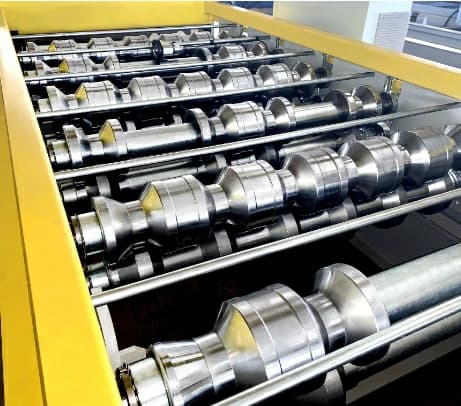
The sheet passes through successive bends in each stand by means of rolls, ensuring precision and quality in the final profile geometry. [cite: 213]
• 16 stands for trapezoidal profiles. [cite: 216]
• 10 stands for corrugated profiles. [cite: 216]
Machines with fewer stages can generate profiles with deformations and misalignments, resulting in a product without acceptable quality for the market. [cite: 217] The proper number of stages ensures a progressive forming process, avoiding excessive stress on the sheet. [cite: 218]
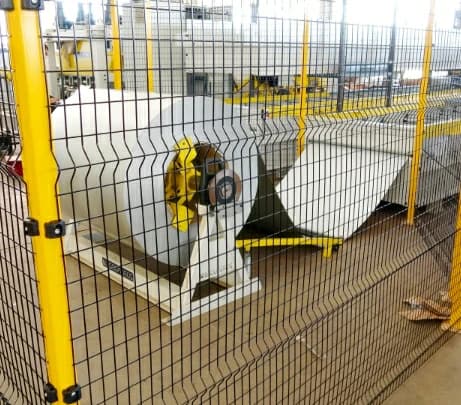
Common options have capacity for up to 10 or 15 tons. [cite: 221]
It is essential that the equipment has centralized mandrel expansion for secure fixation. [cite: 222]
Advanced models feature automatic electronic speed and tension control synchronized with the machine to increase productivity. [cite: 224]
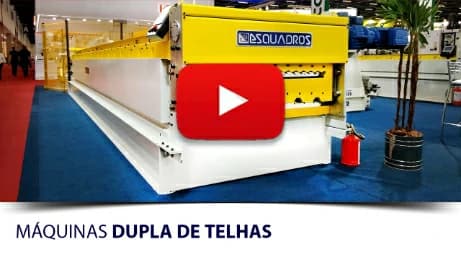
However, there are double-deck machines that allow producing two distinct profiles on the same equipment, optimizing the factory's physical space. [cite: 227, 228]
Triple machines may present operational limitations and are not recommended for those seeking stability and long-term quality. [cite: 230]
Effective productivity depends on the cut cycle time and speed ramps. [cite: 234]
Generally, capacity varies between 800 and 3,000 meters of tile per hour, depending on the profile and the length of the pieces. [cite: 235]
To operate with tiles up to 12 meters, a total area of about 24 meters in length by 2 meters in width is recommended. [cite: 239]
Sandwich tile productions require additional area for the gluing and assembly process. [cite: 240]
Companies that do not follow the standard assume risks of accidents and may face fines, production stoppages, or warehouse interdiction. [cite: 243]
• Dimensional and geometric non-compliance. [cite: 248]
• Gaps between tiles that compromise sealing. [cite: 249]
• Water and wind leaks and infiltrations. [cite: 250]
• Deformed edges that make fitting difficult. [cite: 251]
• Absence of standardization in the final product. [cite: 252]
• Compromised aesthetics of the roofing. [cite: 253]
• Material loss due to a high reject rate. [cite: 255]
• Problems with the structural strength of the tile. [cite: 256]
Ensuring compliance with standards is essential to avoid financial losses and customer complaints. [cite: 258]
The lack of efficient technical assistance and difficulty in replacing parts directly impact productivity and the business's financial result. [cite: 263]
Tiles with recurring defects compromise brand credibility and affect future sales. [cite: 266]
Investing in reliable machines protects the company's image and strengthens its position in the regional market. [cite: 267]
• Analyze if the machine is technically suitable for your application. [cite: 271]
• Visit the manufacturer's facilities to evaluate the quality standard. [cite: 272]
• Seek real references from other active customers of the manufacturer. [cite: 273]
• Visit machines in operation to evaluate actual performance. [cite: 274]
• Prioritize machines with a higher level of automation. [cite: 276]
• Check the after-sales structure for parts and services. [cite: 277]
• Evaluate the financial solidity and history of the manufacturer. [cite: 280]
• High productivity without the need for large stocks of finished tiles. [cite: 282]
• Absence of minimum order. [cite: 283]
• Immediate delivery capacity. [cite: 284]
• Production of customized lengths to measure. [cite: 285]
• Total control of the internal quality standard. [cite: 286]
For an estimate suited to your market reality, it is necessary to consult the manufacturer's technical and commercial team. [cite: 289]
Also contributing are the popularization in residential works, the recyclability of steel, and the speed of installation, which reduces structural and labor costs. [cite: 297, 298, 299]
• Clay tiles: Traditional, but very heavy and with a high breakage rate. [cite: 304]
• Concrete tiles: Resistant, but extremely heavy. [cite: 305]
• Fiber cement tiles: Changed characteristics after the removal of asbestos. [cite: 306, 307]
• Ecological tiles: Lightweight, but with low mechanical strength. [cite: 308]
• Glass tiles: Expensive and require frequent maintenance. [cite: 309]
Metal tiles have consolidated as the best alternative due to their lightness and durability. [cite: 310]
Advantages include a longer useful life, speed of installation, variety of models, and excellent thermoacoustic options. [cite: 313, 315, 316, 317]
Additionally, steel is 100% recyclable, and the tiles require less maintenance over time. [cite: 318, 320]
• Adequate physical space to accommodate the line and stock. [cite: 324]
• High-quality roll-forming machine. [cite: 325]
• Raw material coil (coated steel). [cite: 326]
• Safe coil handling system (bridge or gantry). [cite: 328]
With this basic structure, it is possible to start operation and grow according to demand. [cite: 329]
This reduces high logistical costs and the risk of damage during transport of finished tiles, allowing for more competitive prices and greater flexibility in customized production. [cite: 332, 333]
THERE IS
NO COMPARISON
Top of the line components that guarantee performance and
longevity for your equipment.
WHAT MAKES A
MACHINE A ESQUADROS®?
Modern machines with an innovative concept.
State-of-the-art in coil processing.

Easy Payment
We are eligible for all
financing available in
Brazil...

Guaranteed Exchange
We guarantee an exchange for a
superior model according to the growth
needs of your business.

Contact Us
Have any questions? Have a chat with an expert
online or call us at:
+55 16 3712 4100.